TomWhite
I’m reading Warren Miller’s autobiography Freedom Found. He’s discussing his first trip to Walt Schoenknecht’s Mt. Snow. Walt was very “creative”. Instead of chairlifts using cables, he built ones with chains. After some building details he says, “Walt soon learned that grease is subject to gravity, and it will fall from the rolling wheels…Walt welded a roof on every chair.” Each had to be at least 7’ 6” to cover the length of a ski. “It was innovative, different, and did not work very well. He also had a large dry-cleaning bill to pay everyone who rode the chairlift before he added the roofs.”
Miller mentions the application to the Atomic Energy Commission. Walt thought he could set off an atomic bomb at the base. It would create a deep crater, adding vertical drop to the ski area.
“His base lodge had a gravel floor. That way it was classified as a picnic area and his property tax bill was lower. Very cleaver. He also built it w/o a foundation so that he could move it somewhere else when he got enough money to build a bigger one. The lodge was cold, so he had several aquariums installed with tropical fish in them. He would point to them whenever anyone complained about the cold to show that his tropical fish were doing just fine.”
My first visit to Mt. Snow was 1973/74. The main lodge had the aquariums (huge) but the floor was concrete. The outdoor pool was open. The tram cars across the lake were running. There were two clam shell gondolas and at least one bubble chair (Snowdance/Canyon). I believe there were two chain chairlifts still operating on the lower mountain.
The group of fraternity brothers did the first free hour at Killington. We didn’t like conditions, so we drove down to Mt. Snow. We ended up skiing the afternoon in freezing rain! All gondolas and bubbles were covered in ice. For the second ride to the summit, our gondi didn’t have a footrest. We hadn’t paid much attention about unloading on the first ride. We couldn’t see our ski tips, so we didn’t know if they could get caught (from dangling) on the unloading ramp. We looked out the back (open hole) window to estimate arriving at the summit. Our legs were fatigued from holding our tips up for 1000’! It didn’t matter, the unloading ramp was no problem.
I wasn’t wearing contacts yet. When my goggles iced over, I lifted them up. Of course, my glasses soon iced over. Turning my head to look out the side, helped. But being near-sighted I couldn’t see far. I also tried using the goggles as a visor just above my glasses and tilling my head down. Oh what a lovely ski day!
Dougmccarthy
Thank you for sharing. LOL @ the using an atomic bomb to create vertical. This read made my Friday.
TomWhite
I've known the A bomb story for many years. I didn't know about the application. Miller says, "he once applied to the Atomic Energy Commission to set off a few atom bombs..." Miller does exaggerate. The “few atom bombs” may be. But I’m amazed that one could make such an application. I wonder who and how many applied for backyard A bombs!
joshua_segal
I'm pretty sure I told the story of the 2nd "nuclear effort" at Mt. Snow in which I was involved somewhere over the years of SJ. It was published some years ago in the Journal of the New England Ski Museum.
If there is interest, I can look and see if I can find it.
JimK
joshua_segal;c-41525 wroteI'm pretty sure I told the story of the 2nd "nuclear effort" at Mt. Snow in which I was involved somewhere over the years of SJ. It was published some years ago in the Journal of the New England Ski Museum.
If there is interest, I can look and see if I can find it.
Yes please.
In 1992 I took a very interesting business trip to the Nevada Test Site. This is a location where the US previously conducted nuke bomb tests. (Banned now by treaty.) Most were underground, but I saw some of the surface craters made by nukes and yes, they were big enough to add 300 or 400 vertical feet to a ski area.
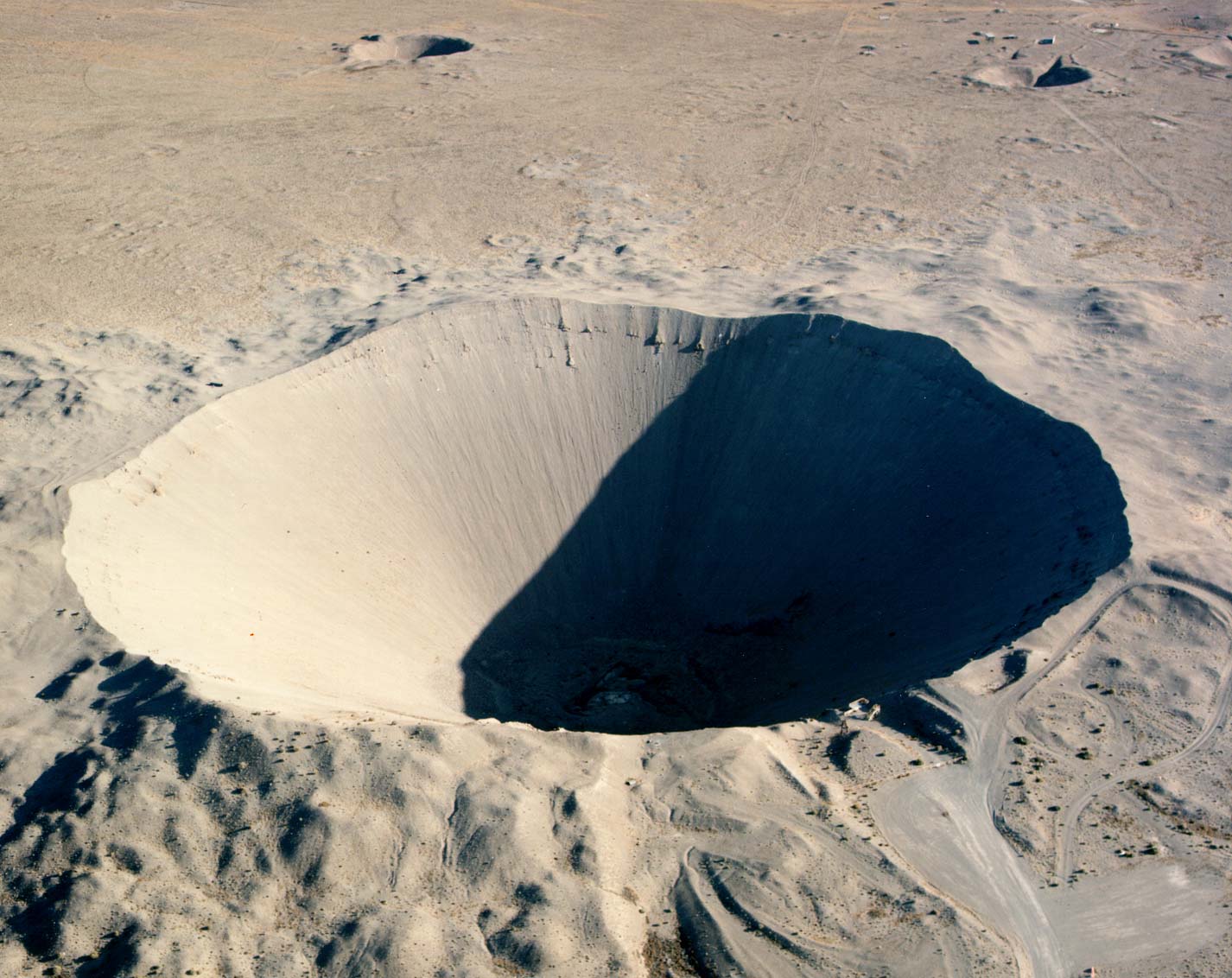
FYI, in the early 1960s The Plowshare project was conducted by the US in order to determine the feasibility of using nuclear detonations to quickly and economically excavate large amounts of earth and rock. Proposed applications included the creation of harbors, canals, open pit mines, railroad and highway cuts through mountainous terrain and the construction of dams. Assessment of the full effects of the Plowshare nukes project showed that the radioactive fallout from such uses would be extensive. Public concerns about the health effects and a lack of political support eventually led to abandonment of the concept. No such nuclear excavation has since been undertaken by the United States
TomWhite
Last night I read the Mt. Whittier article on NewEnglandSkiHistory. I hiked up it some 30 yrs. I rode the T-bar that operated the “mountain coaster”. One sat on it like a horse. It seemed like a good skier’s mountain. My wife skied there, but she doesn’t remember anything about it. Did any of you ski it?
ski_it
Never did. Passed it up several times while it was still operational on my way to Wildcat.
joshua_segal
TomWhite;c-41616 wroteLast night I read the Mt. Whittier article on NewEnglandSkiHistory. I hiked up it some 30 yrs. I rode the T-bar that operated the “mountain coaster”. One sat on it like a horse. It seemed like a good skier’s mountain. My wife skied there, but she doesn’t remember anything about it. Did any of you ski it?
I skied there a number of times. It's biggest problem was that pretty much all of the terrain off the top (where the gondola left off) was expert terrain, made even a bit harder by virtue of limited snow.
TomWhite
Ragged Mt.
I’ve been reading articles in NewEnglandSkiHistory. The Endriunas brothers, a construction company south of Boston bought Ragged in 1987. I remember them making the point of gradual development, not taking on too much debt. But they still went under (see last below). The year that the HSS went in, I spoke with their rep at the Boston Ski Show. He said, “This lift is only $60k more than a HSQ. We think we’re getting great advertising being the first six pack in New Hampshire.” I think Jiminy’s was first in NE in 2000.
In 1987 a quarter million was spent to get the summit chair running. Snowmaking, Spear Peak and a large base lodge went in over next decade. NESH has the following two paragraphs. I played the golf course. It is a “cart only” course, very hilly. The next paragraph reminds me of what happened at Ascutney. However, unlike Ascutney, Ragged did invest in snowmaking.
In the summer of 1999, the hilly 18 hole Ragged Mountain golf course opened. Numerous wetlands, along with an 820 foot vertical change, quickly made the course known as one of the most challenging around.
In the winter of 2002, Ragged opened the first high speed detachable six person chairlift in New Hampshire. Purchased at a discount after another ski area had cancelled an order, the new lift was seen as a key piece of a future expansion that would have made Ragged the largest ski resort south of the White Mountains. Foreshadowing future problems, the lift did not open until February, leaving the upper main mountain inaccessible for the first half of the season. The costs associated with the lift contributed to the eventual bankruptcy of the area.
joshua_segal
TomWhite;c-41734 wroteRagged Mt.
I’ve been reading articles in NewEnglandSkiHistory. The Endriunas brothers, a construction company south of Boston bought Ragged in 1987. I remember them making the point of gradual development, not taking on too much debt. But they still went under (see last below). The year that the HSS went in, I spoke with their rep at the Boston Ski Show. He said, “This lift is only $60k more than a HSQ. We think we’re getting great advertising being the first six pack in New Hampshire.” I think Jiminy’s was first in NE in 2000.
In 1987 a quarter million was spent to get the summit chair running. Snowmaking, Spear Peak and a large base lodge went in over next decade. NESH has the following two paragraphs. I played the golf course. It is a “cart only” course, very hilly. The next paragraph reminds me of what happened at Ascutney. However, unlike Ascutney, Ragged did invest in snowmaking.
In the summer of 1999, the hilly 18 hole Ragged Mountain golf course opened. Numerous wetlands, along with an 820 foot vertical change, quickly made the course known as one of the most challenging around.
In the winter of 2002, Ragged opened the first high speed detachable six person chairlift in New Hampshire. Purchased at a discount after another ski area had cancelled an order, the new lift was seen as a key piece of a future expansion that would have made Ragged the largest ski resort south of the White Mountains. Foreshadowing future problems, the lift did not open until February, leaving the upper main mountain inaccessible for the first half of the season. The costs associated with the lift contributed to the eventual bankruptcy of the area.
I worked at Ragged Mtn. from 1997-8 season thru 2006-7 season and saw it all happen.
The Endriunas brothers didn't understand the ski industry and they didn't hire a management team that understood the industry or for that matter, even their market.
An example: The mountain ran an overtly anti-Semitic ad in the Boston media market. When a number of Jewish organizations threatened to cancel trips there and to organize a boycott or demonstration, I had a letter published in the Boston Jewish Advocate (the newspaper of record for the Jews of the greater Boston area) that basically said in diplomatic terms that Ragged's management was too stupid to even recognize their ad was anti-Semitic. While IMO, I'd pulled their chestnuts out of the fire, they never acknowledged what I did. (For any readers of SJ who are unaware, I am a rabbi - now retired, so my word had some clout in the Jewish community.)
TomWhite
I knew your background. I’m a retired Episcopal priest. It’s funny you speak of their “cluelessness” about the ski industry. I knew they were a construction co. When I golfed there, looking at all the boulders used for raised tees and landscape, I said to my partner, “You can tell the owners are in construction.”
TomWhite
I read the Cannon article in NE Ski History. I was surprised at the continuing cost of maintaining the tram. Unlike most lifts, it runs year-round (perhaps not spring). I’m sure it brings in much money during tourist season, but it is expensive to maintain.
NESH
Citing competition with private industry, as well as the then-$3 million request for a tram replacement, Governor Thomson considered selling or leasing both Cannon and Sunapee in 1977. The tram replacement was eventually approved, however, for $3.7 million. In May of 1978, Agudio Corp. of Italy came in with the lowest bid at $3.8 million. Work began in July of 1978 and continued through May of 1980. Growing to $4.6 million in cost, 80 passenger tramway debuted in late May.
In March of 1987, the State of New Hampshire Executive Council authorized a $34,000 contract with Garaventa for work on the Cannon Aerial Tramway.
In April of 1998, the State of New Hampshire Executive Council authorized a $96,800 agreement with Vonroll Tramways for work on the Cannon Aerial Tramway.
In November of 2001, the State of New Hampshire Executive Council authorized a $1,009,000 agreement with American Tramways Inc. for Cannon Aerial Tramway upgrades and repairs.
TomWhite
In grew up in western PA, where Laurel Mt. is. Decades ago, in a photo of their T-bar, I remember seeing a double chair hanging from the T-bar cable. I didn't know why, now I do (first para. below). I mostly skied at Hidden Valley and Seven Springs. I was young for the couple of times our parents drove me and my buddy to Laurel Mt. Lower Wildcat had such a reputation for being steep, I never ventured down it, and thus up the T-bar. In the second paragraph from their site, I see Grossinger's of the Catskills. I assume they're the same family that owned Ski Wing in western NY. Also, Seven Springs is famous for snowmaking inventions, but Laurel was first. In the third para. you see several other ski areas. I skied at all of them. Another little area was Indian ____, maybe Mt. It had 2 or 3 pomas and was very close to Seven Springs. Here's a trivia question, which of the listed areas are still open?
------------------
In 1955 a new lift, perhaps the only of its kind, a Constam T-bar with single seat chairs dispersed among the T-bars, became the first top to bottom lift eliminating the need to use 3 rope tows to get to the summit. The chairs were added to transport injured skiers to the top where all skiers’ services were located. There was no access road to the bottom of the lift.
In 1956 Laurel was among the first ski resorts to install large scale snowmaking. Commercial snowmaking was first demonstrated on Mohawk Mountain, CT in 1949-50 and put to greater use the following winter. In 1952 the first largest commercial system was operational at Grossinger’s Catskill Resort Hotel, another Schneider designed slope. Laurel’s new installation bested those early “snow making machines” by covering 4 slopes over a 285 vertical drop. (Seven Springs Snowmaking was installed in 1960).
Hidden Valley, Bear Rocks, and Plateau De Mount were new and like Seven Springs, all had easier access from the Pennsylvania Turnpike. The early December opening day 1966 count went to Seven Springs at 3,800 to Laurel’s less than 2000. Pittsburgh’s newest lift served ski area, Boyce Park (all 180 vertical feet of it), only 15 minutes from downtown Pittsburgh, drew 1600 skiers.
bmwskier
Chairs to transport injured skiers on a T-bar line? Please, let there be some photos around. A quick google image search didn't turn up anything. Nothing on Chairlifts.org either.
I guess hooking the front of a Sun Valley toboggan to the crossbars by rope with a patroller guiding it on the t-bar wasn't considered?
TomWhite
Now you're testing my memory. I saved ski area brochures from my youth. In our move from MA to CT over 25 years ago, my wife secretly through dozens out. I was still able to lend Jeremy a dozen and a 1969 ski atlas for various histories.
I had two Laurel Mt. brochures. The older cover had two girls riding the T-bar (“Western Pennsylvania’s Longest”). It the background is a double chair on the downside cable. I still have scores. But in a quick look, I didn’t find Laurel. But I see a 1970 Seven Springs, 1978-79 Hogback and a Magic with Timberside in 1987.
trackbiker
Tom White wrote, "Another little area was Indian ____, maybe Mt. It had 2 or 3 pomas and was very close to Seven Springs."
The area was Indian Lake. There's a little information about it on DCSki.com
dcski.com/lostareas/viewlostprofile.php?id=101
TomWhite
My mistake, it was White Mt. Perhaps it had an Indian theme. It’s in my ski atlas. The atlas (1969) says: 380’ vert., poma 1750’, T-bar 600’, tow 600’, 4 trails, 3 slopes. It was small, in Champion. That’s the same town for Seven Springs.
bousquet19
Tom, White Mountain Ski Area PA was located immediately west of Seven Springs. You can see a bit of it from the Gunnar Lift and the top of Lost Girl Trail at 7S. Here's the writeup on DCSki.com. Several of the reader comments provide interesting details.
http://www.dcski.com/lostareas/viewlostprofile.php?id=5
TomWhite
Thanks. The historical photo in dcski is how I remember the place in the mid-60's, wide open.
LaurelHillCrazie
TomWhite;c-42089 wroteIn grew up in western PA, where Laurel Mt. is. Decades ago, in a photo of their T-bar, I remember seeing a double chair hanging from the T-bar cable. I didn't know why, now I do (first para. below). I mostly skied at Hidden Valley and Seven Springs. I was young for the couple of times our parents drove me and my buddy to Laurel Mt. Lower Wildcat had such a reputation for being steep, I never ventured down it, and thus up the T-bar. In the second paragraph from their site, I see Grossinger's of the Catskills. I assume they're the same family that owned Ski Wing in western NY. Also, Seven Springs is famous for snowmaking inventions, but Laurel was first. In the third para. you see several other ski areas. I skied at all of them. Another little area was Indian ____, maybe Mt. It had 2 or 3 pomas and was very close to Seven Springs. Here's a trivia question, which of the listed areas are still open?
------------------
In 1955 a new lift, perhaps the only of its kind, a Constam T-bar with single seat chairs dispersed among the T-bars, became the first top to bottom lift eliminating the need to use 3 rope tows to get to the summit. The chairs were added to transport injured skiers to the top where all skiers’ services were located. There was no access road to the bottom of the lift.
In 1956 Laurel was among the first ski resorts to install large scale snowmaking. Commercial snowmaking was first demonstrated on Mohawk Mountain, CT in 1949-50 and put to greater use the following winter. In 1952 the first largest commercial system was operational at Grossinger’s Catskill Resort Hotel, another Schneider designed slope. Laurel’s new installation bested those early “snow making machines” by covering 4 slopes over a 285 vertical drop. (Seven Springs Snowmaking was installed in 1960).
Hidden Valley, Bear Rocks, and Plateau De Mount were new and like Seven Springs, all had easier access from the Pennsylvania Turnpike. The early December opening day 1966 count went to Seven Springs at 3,800 to Laurel’s less than 2000. Pittsburgh’s newest lift served ski area, Boyce Park (all 180 vertical feet of it), only 15 minutes from downtown Pittsburgh, drew 1600 skiers.
bmwskier;c-42090 wroteChairs to transport injured skiers on a T-bar line? Please, let there be some photos around. A quick google image search didn't turn up anything. Nothing on Chairlifts.org either.
I guess hooking the front of a Sun Valley toboggan to the crossbars by rope with a patroller guiding it on the t-bar wasn't considered?

William Boardman, Len Bughman, and R.K. Mellon dedicate new Constam T-bar 1955. R.K. cuts the ribbon. Len sits in an attached chair used to hall injured skiers back to the top of Laurel. There were no roads to access the bottom of the mountain.
http:/https://archives.post-gazette.com/clip/2296735/t-bar-dedication-1955//
